
How to choose a good olive oil? A practical guide to recognizing quality
With such a wide variety of oils available, choosing a quality olive oil is not always easy. Origin of the olives, harvest date, extraction method, variety, aromas and storage conditions: several criteria can help distinguish an exceptional oil from a more ordinary product.
Here are the essential points to consider when choosing a good olive oil and, above all, learning how to recognize its qualities through tasting.
1. Choose extra virgin olive oil
The term “extra virgin olive oil” is an important first indicator. This category corresponds to the highest quality level defined for virgin olive oils. The oil is obtained directly from olives using mechanical processes, without chemical refining, and must meet specific physicochemical and sensory criteria.
A quality extra virgin olive oil must notably be free from sensory defects and have a perceptible fruity character. But this designation alone is not enough to choose between two bottles: you should also consider the origin, freshness and work of the producer.
2. Check the origin of the olives
A clear indication of origin provides valuable information. When the region, estate or even olive variety is identified, it becomes easier to understand the oil’s personality and trace its journey.
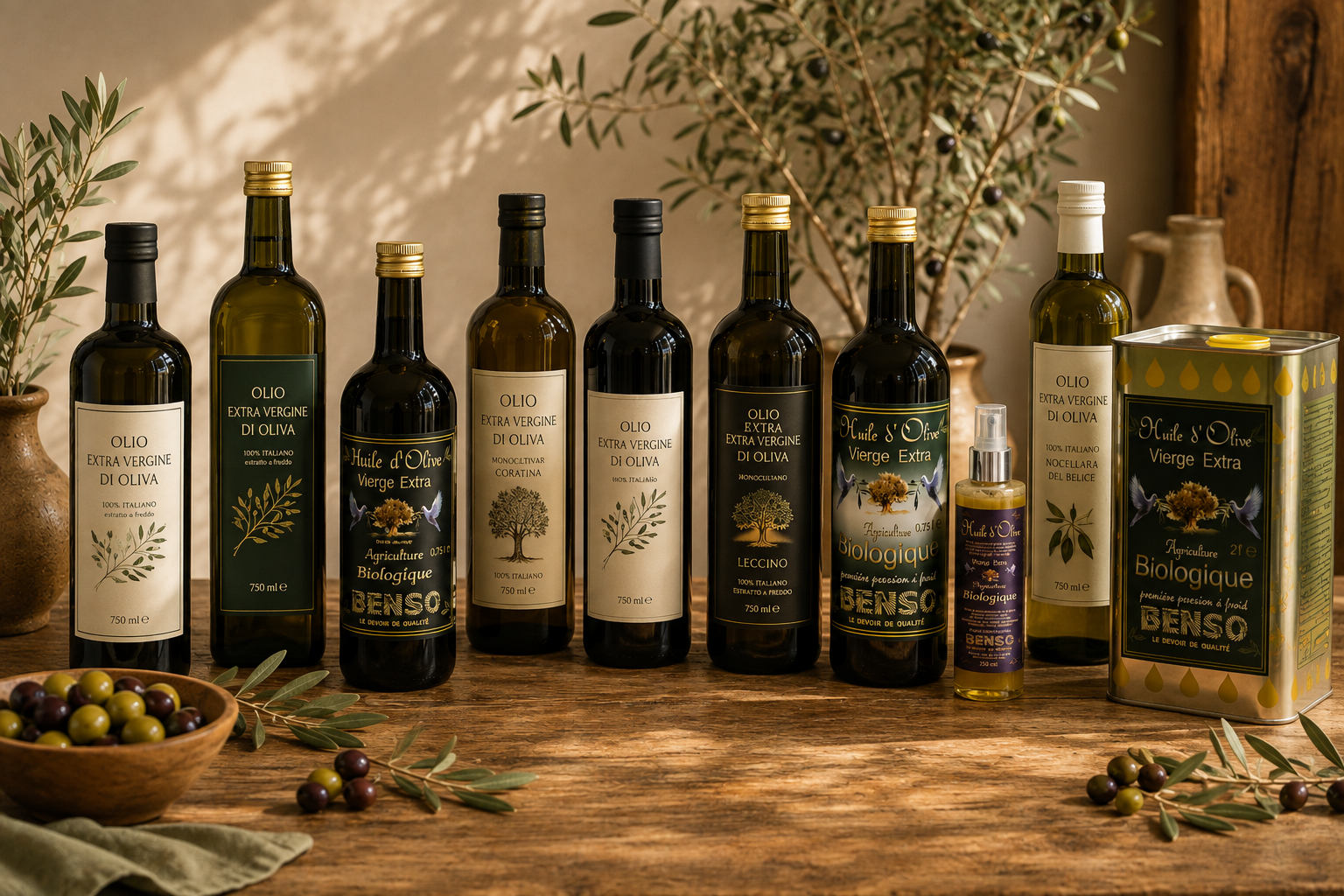
L’huile d’olive biologique Benso , for example, is produced exclusively from olives of the Leccinovariety, grown on the Benso family estate. The olive groves are located in Abruzzo National Park, at an altitude of between 500 and 700 metres. This mountainous terroir contributes to the oil’s identity and aromatic profile.
3. Understand the extraction method
The quality of an oil depends greatly on how carefully the olives are handled between harvesting and extraction. Healthy fruit, handled with care and processed quickly, helps preserve its aromatic characteristics.
The term “cold extraction” indicates that the oil was obtained using mechanical processes under regulated temperature conditions. Careful control of the entire process — harvesting, transportation, crushing, malaxation, separation and storage — is nevertheless just as important in producing an expressive and well-balanced oil.
4. Is colour a sign of quality?
Contrary to a common misconception, colour cannot be used to judge the quality of an olive oil. An oil can range from golden yellow to intense green depending on the variety, the ripeness of the olives and other natural factors, without this indicating that it is better or worse.
This is why professional tasters traditionally use coloured glasses: they prevent the appearance of the oil from influencing their assessment.
5. Smell the oil: fruitiness is an excellent indicator
To discover an oil, pour a small amount into a glass and warm it in your hand for a few moments. Then bring the glass to your nose. A good extra virgin olive oil should reveal fresh, clean aromas.
Depending on the variety and degree of ripeness of the olives, you may detect notes of fresh grass, olive leaf, almond, artichoke, tomato or fruit. Aromatic intensity does not necessarily mean superior quality: what matters most is the clarity, freshness and balance of the sensations.
Those who enjoy particularly expressive profiles can also discoverBenso extra fruity olive oil.
6. Taste the oil: the best way to judge its quality
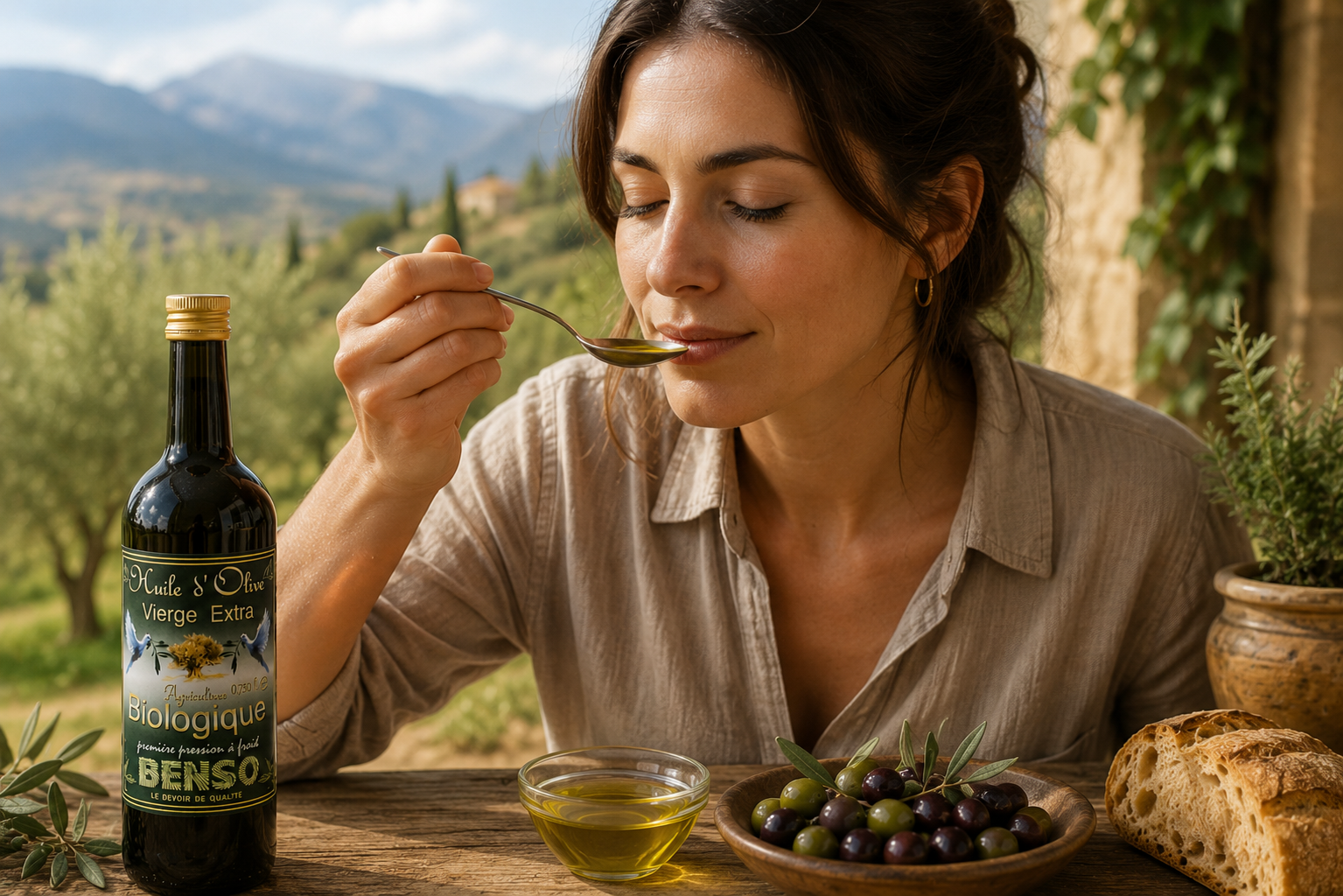
To truly discover an olive oil, nothing replaces tasting it. Pour a small amount into a glass, warm it between your hands for a few moments, then smell the oil before tasting it.
Look for clean, pleasant aromas. On the palate, a high-quality oil may be mild or intense, but it should retain a certain balance. Bitterness and pungency may be present to varying degrees depending on the variety, the ripeness of the olives and the desired style.
7. On the palate, don’t be afraid of bitterness or pungency
Two sensations can sometimes be surprising when tasting olive oil: bitterness and pungency. They are not defects. They are among the positive characteristics that an extra virgin olive oil can display and are notably associated with the presence of phenolic compounds.
A good oil can therefore begin smoothly, followed by slight bitterness and a peppery sensation in the throat. Their intensity varies considerably depending on the olive variety, ripeness and desired style. What matters is finding a harmonious and pleasant balance.
8. Choose your olive oil according to how you will use it
There is no single ideal profile for every recipe. A balanced, fruity oil is particularly versatile: salads, vegetables, pasta, fish, soups or simply a few drops on bread. A more intense oil can add extra character to bruschetta, grilled vegetables or a dish finished just before serving.
The packaging can also be chosen according to how you intend to use the oil. Alongside the traditional 75 cl bottle of Benso olive oil, the 25 cl olive oil spray allows for a fine, controlled application on salads, vegetables or dishes just before serving.
9. Store your olive oil properly after purchase
Even an excellent oil can quickly lose its qualities when stored incorrectly. Its main enemies are light, heat and oxygen. Keep your oil tightly closed in its original container, in a cool, dark place, away from the oven or a window exposed to sunlight.
Once the bottle has been opened, it is better to use it regularly rather than keeping it for many months. Choosing a size suited to your consumption therefore helps you enjoy more of its aromatic freshness.
The essential criteria to remember
When choosing a good olive oil, look first and foremost for an extra virgin olive oil with a clearly stated origin, made from carefully harvested olives that have been processed quickly. Check the harvest date when it is provided, favour fresh oil and pay more attention to aromas and taste than to colour.
Finally, a quality oil should above all make you want to use it. Just a few drops are often enough to transform a simple ingredient: ripe tomatoes, toasted bread, vegetables, pasta or cheese. Paired with a balsamic vinegar or pestos, tapenades and sauces, it also becomes one of the most versatile foundations of generous Mediterranean cooking.